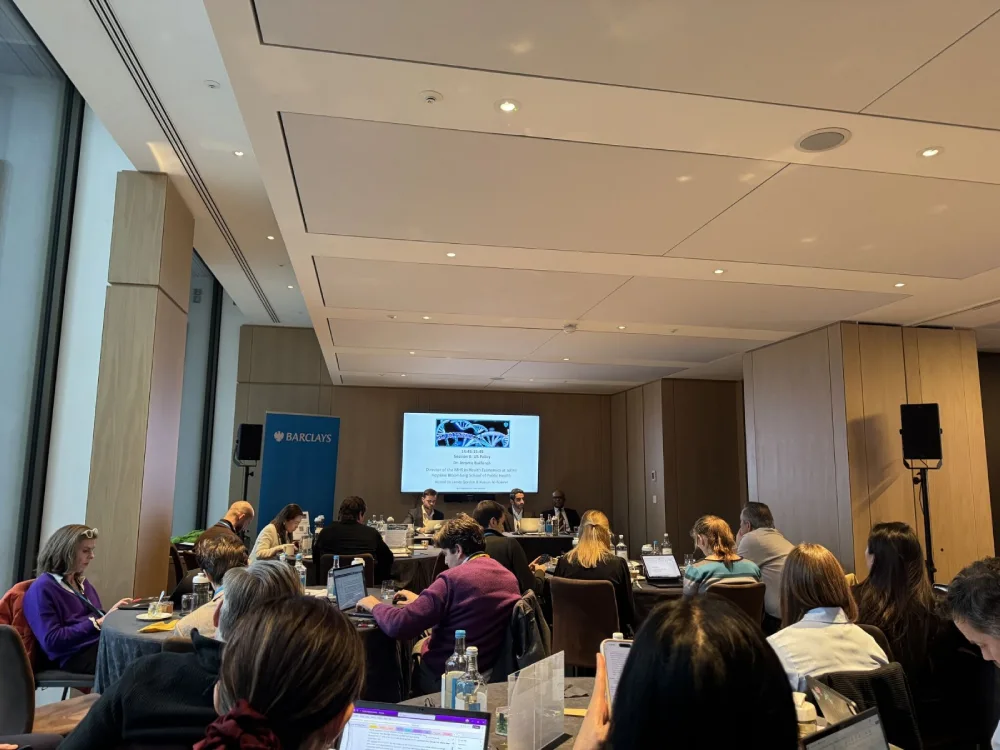
In the heart of London, a pivotal conversation unfolded, shaping the future of healthcare as we know it. The annual Barclays Healthcare Clinicians in the City event brought together a confluence of brilliant minds – leading clinicians, astute investors, and visionary peers. Among them was Mr. Sivan Sivaloganathan, a distinguished Consultant Orthopaedic Surgeon, who contributed his extensive clinical expertise to the discourse.
This gathering was more than a meeting; it was a crucible for forging the path of MedTech and healthcare through to 2026 and beyond. Mr. Sivaloganathan’s participation underscores the critical importance of integrating frontline clinical experience into the engine room of healthcare innovation.
The Crucial Nexus of Clinical Expertise and Investment
The dialogue between clinicians and investors is not merely beneficial; it is the very bedrock of patient-centric healthcare innovation. Mr. Sivan Sivaloganathan’s presence at the Barclays event highlights a fundamental truth: to solve the most pressing challenges in healthcare, the innovators and the investors must be in lockstep with the clinicians who are at the coalface of patient care.
This synergy ensures that the trajectory of MedTech is not dictated by technology for technology’s sake, but by the genuine needs of patients and the clinical realities faced by healthcare professionals. It is this cross-industry dialogue that steers the ship of progress towards safer, more effective, and more accessible healthcare for all.
Aligning Innovation with Patient Outcomes
At the core of this collaborative spirit is the shared goal of improving patient outcomes. Mr. Sivan Sivaloganathan’s contributions to the panel discussions were instrumental in grounding the conversation in the tangible impact of innovation on patients’ lives.
When investors understand the clinical nuances of a new technology, they can make more informed decisions that support the development of truly transformative solutions. This alignment is essential for ensuring that the MedTech revolution translates into meaningful advancements in diagnosis, treatment, and recovery, ultimately enhancing the quality of life for countless individuals.
The MedTech Horizon: A Glimpse into 2026 and Beyond
The discussions at the Barclays event painted a vivid picture of the MedTech landscape in the coming years. The consensus is clear: we are on the cusp of a new era in healthcare, driven by a convergence of technologies that promise to reshape the practice of medicine. Mr. Sivan Sivaloganathan and his fellow experts explored a range of trends that are set to define the future of healthcare, particularly in the realm of orthopedic surgery.
The Ascendancy of Artificial Intelligence and Precision Medicine
Artificial intelligence (AI) is no longer a futuristic concept; it is a present and powerful force in healthcare. In orthopedics, AI is poised to revolutionize everything from diagnostic imaging to surgical planning and personalized treatment protocols.
Mr. Sivan Sivaloganathan’s insights into the practical applications of AI in his field shed light on how this technology can enhance surgical precision, predict patient outcomes, and optimize treatment pathways. The era of one-size-fits-all medicine is drawing to a close, and the future lies in precision medicine, where treatments are tailored to the individual genetic, environmental, and lifestyle factors of each patient.
The Shift to Minimally Invasive and Robotic-Assisted Surgery
The trend towards less invasive surgical techniques is not new, but it is accelerating at an unprecedented pace. Mr. Sivan Sivaloganathan, a proponent of advanced surgical techniques, emphasized the profound benefits of minimally invasive procedures for patients, including reduced pain, shorter recovery times, and lower risk of complications. The integration of robotics into the operating theatre is a key enabler of this trend.
Robotic-assisted surgery augments the surgeon’s skill and precision, allowing for more complex procedures to be performed with greater accuracy and control. As this technology becomes more widespread, it will undoubtedly transform the patient experience and raise the standard of care in orthopedic surgery.
The Digital Ecosystem: Integrating Devices and Data
Medical devices are no longer standalone instruments; they are becoming integral components of a connected digital ecosystem. From wearable sensors that monitor a patient’s recovery to smart implants that provide real-time data on their performance, the Internet of Things (IoT) is creating a wealth of information that can be used to optimize patient care.
Mr. Sivan Sivaloganathan’s perspective on the importance of data-driven decision-making in orthopedics underscores the need for seamless integration between medical devices, electronic health records, and other digital platforms. This interconnectedness will enable a more holistic and proactive approach to patient management, both within and beyond the hospital walls.
The Patient at the Centre: The Humanistic Vision of Healthcare Innovation
Amidst the excitement about technological advancements, it is crucial to remember that the ultimate purpose of healthcare innovation is to serve the patient. Mr. Sivan Sivaloganathan’s contributions to the Barclays event served as a powerful reminder of this humanistic vision.
The most sophisticated technology is meaningless if it does not improve the patient’s journey, alleviate their suffering, or restore their quality of life. Therefore, the development and adoption of new technologies must always be guided by a deep understanding of the patient’s needs, preferences, and values.
Empowering Patients Through Education and Engagement
An informed patient is an empowered patient. The digital revolution in healthcare is not just about new tools for clinicians; it is also about new ways to engage and educate patients. Digital platforms can provide patients with access to reliable information about their condition, treatment options, and what to expect during their recovery.
Mr. Sivan Sivaloganathan recognizes the importance of patient education in fostering a collaborative relationship between the patient and the clinical team. When patients are active participants in their own care, they are more likely to achieve better outcomes.
The Ethical Imperative: Ensuring Equity and Access
As we embrace the transformative potential of MedTech, we must also be mindful of the ethical implications. Mr. Sivan Sivaloganathan and his colleagues at the Barclays event acknowledged the importance of ensuring that the benefits of healthcare innovation are accessible to all, regardless of their socioeconomic status or geographical location.
The digital divide is a real and pressing issue, and we have a collective responsibility to bridge this gap and ensure that no one is left behind. The pursuit of innovation must be accompanied by a commitment to equity and social justice.
A Future Forged in Collaboration
The annual Barclays Healthcare Clinicians in the City event was a testament to the power of collaboration. The insights shared by Mr. Sivan Sivaloganathan and his fellow panelists have illuminated the path forward for healthcare innovation.
The future of healthcare will be shaped by the synergy between clinical expertise, investment, and technology. It will be a future where precision medicine, minimally invasive surgery, and digital health are the norm, not the exception. And at the heart of it all will be the patient, whose well-being is the ultimate measure of our success.
To learn more about the latest advancements in orthopedic care, we invite you to explore our resources. For a consultation with Mr. Sivan Sivaloganathan , book now!
Frequently Asked Questions
What was the main purpose of the Barclays Healthcare Clinicians in the City event?
The event was designed to foster a dialogue between leading clinicians, like Mr. Sivan Sivaloganathan, and investors to discuss the trajectory of MedTech and healthcare. The primary goal was to ensure that healthcare innovation remains focused on clinical needs and patient outcomes.
What are some of the key MedTech trends that Mr. Sivan Sivaloganathan and other experts discussed for 2026?
The key trends discussed included the rise of artificial intelligence and precision medicine, the shift towards minimally invasive and robotic-assisted surgery, and the integration of medical devices into a connected digital ecosystem. Mr. Sivan Sivaloganathan provided his expert perspective on these trends.
Why is the collaboration between clinicians and investors so important for healthcare innovation?
This collaboration is crucial because it ensures that the development of new medical technologies is guided by the real-world needs of patients and the clinical expertise of healthcare professionals. Mr. Sivan Sivaloganathan’s participation highlights how this synergy leads to more effective and patient-centric solutions.
How is technology changing orthopedic surgery, based on the insights from the event?
Technology is transforming orthopedic surgery by enabling more precise and less invasive procedures. As discussed by Mr. Sivan Sivaloganathan, advancements like robotic-assisted surgery and AI-powered diagnostic tools are improving surgical accuracy, reducing recovery times, and enhancing patient outcomes.
What is the role of the patient in the future of healthcare innovation as discussed by Mr. Sivan Sivaloganathan?
The patient is at the centre of healthcare innovation. The discussions, in which Mr. Sivan Sivaloganathan was a key contributor, emphasized that technology should empower patients through education and engagement. The ultimate goal of all innovation is to improve the patient’s journey and quality of life.